
"I do like feeling things. I really do."
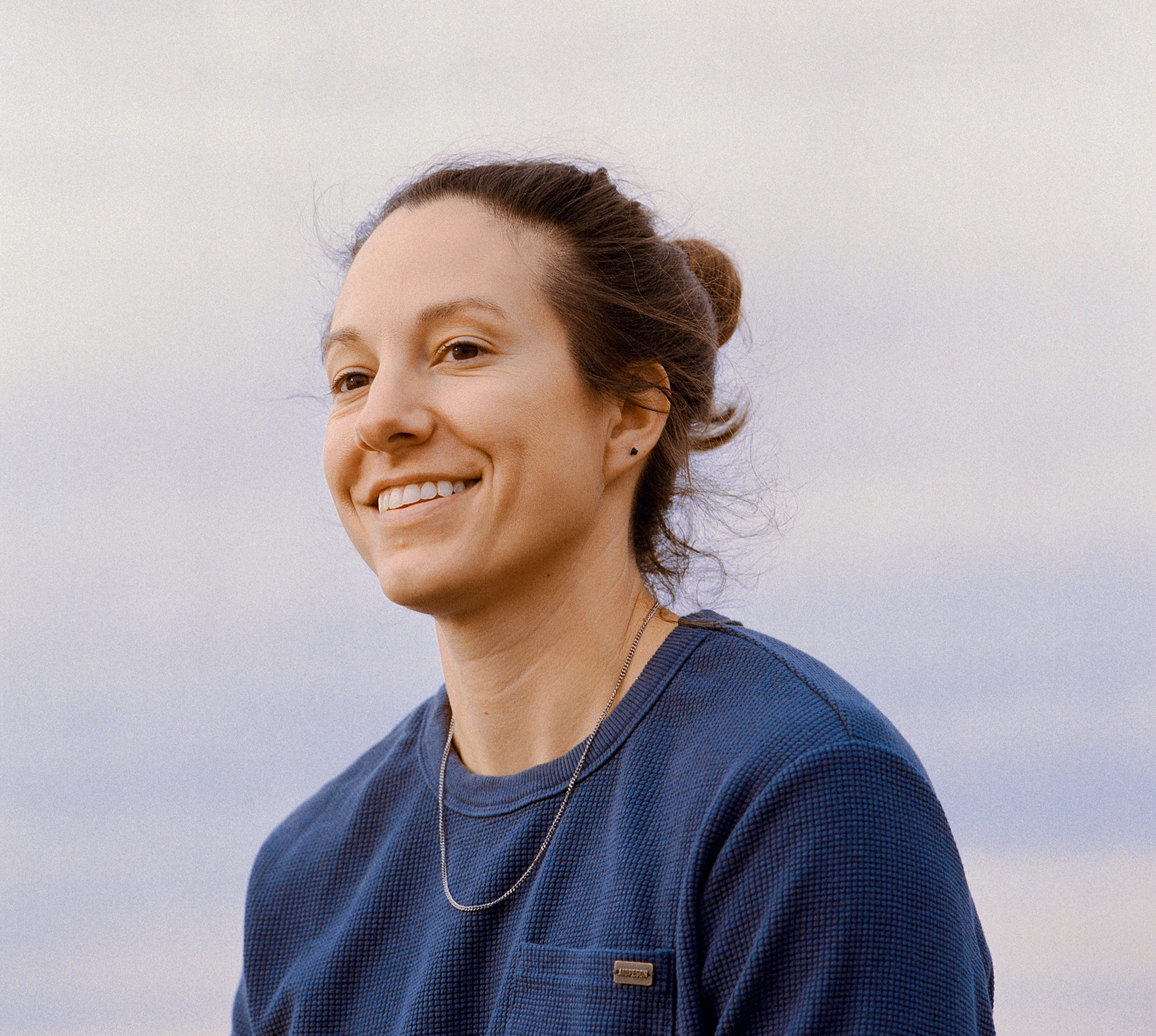
Author and basketball player Mac Crane does the Mad Woman Intake


The impulse to control sexuality is so central to heteropatriarchal, fascist logic that it’s common these days to read about sex, pleasure, and desire within moralistic frames—right or wrong, good or bad. This impulse to treat desire and sexuality as forces to be captured and contained is somewhat bipartisan, but in reality, our bodies and our cravings evade speech, argument, and hot takes. Desire is not only highly personal; it’s frequently nonsensical, irrational, and fluid. That’s the beauty.
Mac Crane’s new collection of short stories, Perverts, is the perfect container for exploring the strangeness and beauty of desire in all its forms. Within fiction, there is no demand to thesis or claim, so the collection tenderly explores characters who sell their underwear (and the “perverts” who buy the undies), FutureWives™, people who pay to act out hate crimes, and parents. As Mac puts it below, the stories also “pervert many canon stories… like Peter Pan and The Magic School Bus.” What results are uncanny worlds that are deeply human and familiar, and that queer language and story as much as they center on queer and trans lives.
Andrea Lawlor calls Mac “a queer George Saunders.” Mac is also the author of the novels I Keep My Exoskeletons to Myself, a LAMBDA winner, and A Sharp Endless Need, a LAMBDA finalist. Their fiction and nonfiction have been widely published.

What is something you are mad about right now?
I thought about going on a rant about what’s pissing me off lately, but I don’t want to give it any more attention. So let me gush. I’m absolutely mad about the WNBA, especially all the queer players living their best lives. I’m absolutely mad about my children, who are 5 and 2 and are interesting and strange and delightful and endlessly creative.
What “feelings rules” did you learn growing up? What did those lessons teach you about gender, relationships, and the world?
We are really just diving in, huh? Well. I was inadvertently taught that my anger, depression, and big feelings were not appropriate and weren’t safe to express (outside of sports, where I could channel them, to an extent). I learned that I’d be punished or pathologized if I did express them. Which, I think, led me to believe that feeling intensely was a fault, a failure, a possible defect. I’ve been working to unlearn these things for my entire adult life, and they contextualize my parenting philosophy, which is that all feelings are safe to express in our home.
What is your relationship now to feeling/emotion? What feelings scare you most? Which emotions do you find most powerful? Do you like feeling things?
I am a freakish contradiction of embracing intense feelings and expressing said feelings + wanting to be in control of myself—and subsequently, my feelings—at all times. Control makes me feel good and grounded, like I won’t fall off the planet if it spins too fast. But I rationally know I cannot have both: I can’t fully embrace my intensity while also tempering it. So, it’s a work in progress.
I used to feel more comfortable being mad than sad. I could externalize it; it could have a target, someone to be pissed at. Being sad at someone just didn’t hit the same, you know? And sadness made me feel pathetic. Now, I’m scared to be out of control, but what that means to me is sort of always changing. Which…makes me feel out of control…
I do like feeling things. I really do. I’ve always been a big feeler. A loverboy. A yearnerboy. A fierceboy. A passionateboy. I wouldn’t have it any other way.
Do you think of your creative process as a state of madness? Emotional expression? Some other way?
My creative process is characterized by obsession, and desire, and at the same time, having to delay the hyperfocus that comes with obsession and desire so that I can parent two young children and be 1,000% present for them. So, it’s sort of like keeping a massive stone in a locked room and sneaking away when I can to chip away a little at a time.
What is your relationship to diagnosis?
This is an interesting question, and one that I like to think and talk about a lot. I have a few mental health diagnoses. Even as I am experiencing and struggling with various symptoms, I almost never think about them, like the actual labels themselves. They don’t do anything for me, personally.
I find the entire existence of the DSM and diagnosis to be paternalistic, prescriptive, and ignoring context, personal experience, and systemic issues in favor of a tidy checklist. And, naturally, you could go to four different psychologists and receive four different diagnoses. Either way, that doesn’t mean other people can’t find them empowering, clarifying, and useful—especially if a diagnosis opens the door to medications and other treatments. All the power to them. But I am disillusioned and jaded, having witnessed the structural violence of diagnosis in various settings.
Maybe at my most cynical, I view diagnoses and borders in much the same way. Invented to control and categorize people, used as justification for abuse, persecution, and oppression. At my most optimistic, I hope diagnoses can provide people with much-needed relief.
If you had to diagnose yourself with something, what would it be?
Pathological yearner.
Have you ever felt normal, healthy, or healed?
No.
How do art and culture make you feel? What are your favorite feelings to have when engaging with books or culture? What do you hope people feel when they engage with your work?
Stimulated, connected to the world and others. I love to be surprised. And challenged. And delightfully befuddled.
I hesitate to hope people *feel* any particular thing when they read my work. I want my books to have staying power, I want them to linger in my readers for a long time. But mostly, before that can even happen, I want readers to come to my work with openness, curiosity, and care; I want them to engage with my work in good faith—whatever they feel after that is, ultimately, private to them. Even if they share my work with others, the experience they had with my book cannot fully be communicated in words, the very thing that got them here in the first place. There is something perfectly tragic about that.
What is the relationship between politics and art for you, and in your work?
How much time do you have? All art is political. It’s impossible to separate art from its sociopolitical context. One cannot create something that is exempt from time, place, power, class, race, sexuality, laws, values, etc.
Author, curator, and art advisor, Maria Brito, said in a 2025 newsletter: “Art, at its core, is about choices. Who gets to make it? Who gets to show it? Who gets to own it? These are all political questions.” That sounds right to me. Even art that would label itself apolitical is political, often because it reinforces the status quo. Like, say, a heterosexual rom com in which the “hot,” white guy gets the “hot,” white girl. That sort of story can never be separated from power and privilege.
However, I think what many people mean when they say art is “political” is that it has something to say or an explicit message. That gets us into tricky territory. To me, the best political art, per this definition, exposes something about society but doesn’t tell you what to think about the social ill. It is woven into the very fabric of the story—which is immersive, complex, and resists tidy, spoon-fed takeaways—and challenges you to reconsider what you thought you knew. Or, finally forces you to look directly at what you’d been ignoring.
The things that I am very interested in exploring in fiction, things that have plagued me and my loved ones, end up creating narratives that people refer to as political. For instance, my debut novel, I Keep My Exoskeletons to Myself, was born from a self-shaming poem I wrote a decade earlier plus the fear of becoming a parent. And then it grew into a dystopian novel about a grieving lesbian widow with a newborn, a novel that indicts the criminal legal system, punishment, systemic oppression, surveillance, and beyond. But I think if I’d set out to write that indictment from the start, my intention would have ruined it, turned it into a lecture. My second novel, A Sharp Endless Need, feels like a time capsule of a certain time and place: homophobia, transphobia, drug abuse, and athletic ambition in small-town PA in the early aughts—the desire to escape, the illicit desire for a teammate, and the far-reaching consequences of shame and grief. (I’m such a slut, I guess, for shame and grief.)
And Perverts is both a reclamation of the term historically weaponized against queer and trans people as well as a nod to the fact that I pervert many canon stories in the book, like Peter Pan and The Magic School Bus. People would probably call a lot of the stories political. They deal with messy queer and trans people making messy decisions. They deal with parenthood, kink, sex work, capitalism, and identity. But, I don’t know. I don’t set out to write anything with an explicit message. Sometimes I just have a weird, fucked character I care about, and I want to put them in a weird, fucked setting and see what they’re made of.
Is there a question you are often asked in interviews that makes you angry or uncomfortable? What do you wish people would ask you instead?
I write fiction. I always get versions of the same question: “How much of this book is inspired by your life?” or “How much of this book is true?” I get the reason for it. People are nosy. They want the gossip. I don’t blame them. But if I tell you that a protagonist in a story in Perverts sells her underwear just like I did, though she is far more successful, what does this information do for you? How has it affected your reading experience? Has it enhanced it? Do you feel differently about the story now?
What is something keeping you sane right now?
My children. I know that the expectation from other parents in the U.S. is for me to say that my children are driving me insane, but they aren’t. They are my little lights.
Reading books by New Narrative authors that are erotic and risk-taking.
Drinks with friends. Writing sessions with friends.
Dr. Pepper zero. Throwing heavy weights around.
Related:


 | A guest post by
|